
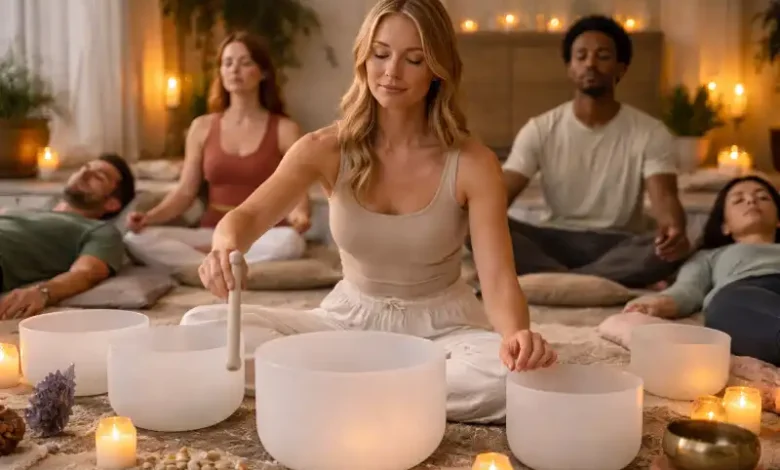
A meditative experience where participants are “bathed” in sound waves produced by various healing instruments.
It’s less about “listening” in the traditional sense and more about feeling the vibrations throughout your body to achieve deep relaxation and healing.
What Happens During a Sound Bath?
Unlike a music concert, there’s no melody or catchy rhythm to follow. The goal is to let your brain stop searching for patterns so it can drift into a meditative state.
- The Setting: You usually lie on a yoga mat with blankets, bolsters, and eye masks. Comfort is the top priority.
- The Instruments: tools like:
- Crystal Singing Bowls: Made of quartz, producing high-frequency, ethereal tones.
- Gongs: Creating deep, resonant vibrations that you can feel in your chest.
- Tibetan Brass Bowls: Known for their rich, grounding harmonics.
- Chimes and Rain Sticks/Drums: Used for “cleansing” the air and transition.
Why Do People Do It?
While the experience is deeply personal, many people turn to sound therapy for its physiological and mental benefits:
- Shift in Brain Waves: The steady, rhythmic sounds can shift the brain from a state of active thinking (Beta waves) to a state of deep relaxation or daydreaming (Alpha and Theta waves).
- Stress Reduction: By triggering the parasympathetic nervous system (the “rest and digest” mode), it helps lower cortisol levels.
- Improved Sleep: Many participants report falling asleep easier and staying asleep longer after a session.
- Emotional Release: It’s common for people to experience a sense of emotional “unblocking” or clarity during the vibrations.
Tips for Your First Class
- Hydrate: Sound travels better through water; staying hydrated can actually enhance the physical sensation of the vibrations.
- Dress Warmly: Your body temperature drops when you lie still and enter a deep state of relaxation.
- Drop the Expectations: Some people see colours, some fall asleep, and some just feel a bit more relaxed. There is no “right” way to feel.
Note: While sound baths are generally very safe and soothing, if you have a history of epilepsy, severe tinnitus, or have a pacemaker, it’s always a good idea to check with your doctor first, as the intense vibrations can sometimes be a bit much for certain conditions.
Why do Pets and Wildlife like it?
The idea of a “sound bath” for pets might sound like peak modern luxury, but it is actually rooted in the biological reality of how animals process their environment. Since many pets have hearing ranges far beyond our own, they are incredibly sensitive to vibration and frequency.
Key Benefits of Sound Therapy for Pets
- Stress and Anxiety Reduction: Just as white noise helps humans sleep, specific frequencies can mask “trigger” sounds (like thunder, fireworks, or construction). Sound baths using singing bowls or soft gongs produce long, sustained notes that can help lower a pet’s cortisol levels.
- Behavioural Management: Sound therapy is frequently used to help with:
- Separation Anxiety: Providing a calming “envelope” of sound when the owner is away.
- Rescue Transitioning: Helping a new pet settle into a nervous or unfamiliar environment.
- Hyperactivity: Encouraging “settle” behaviour in high-energy breeds.
- Physical Relaxation: Low-frequency vibrations can have a physical effect on the body. For older animals or those with joint discomfort, the gentle resonance of a sound bath may promote muscle relaxation and improved sleep quality.
- Heart Rate Stabilization: Studies on shelter dogs have shown that “species-appropriate” music (slow tempos and simple patterns) can lead to a lower resting heart rate and decreased barking.
